Everything above layer 7.
The OSI model specifies seven layers and then stops, because the eighth one cannot be specified. Layer 8 is the human — the decision, the assumption, the craft, the person who has to act on what the machines report.
This is where I write about mine: enterprise data platforms and AI, which is the work; a homelab that keeps getting out of hand; and, in between, a garden, some travel, and the rest of it.
Henning Schüttken Enterprise data architect · SAP Datasphere & SAC planning · builder

- 8Human
- 7Application
- 6Presentation
- 5Session
- 4Transport
- 3Network
- 2Data link
- 1Physical
Layers 1–7 are specified. Layer 8 is observed.


-
 Why Layer 8
The OSI model stops at layer 7. Everything expensive in enterprise data work happens one layer up — and almost none of it is user error.
layer-8
2 min
Why Layer 8
The OSI model stops at layer 7. Everything expensive in enterprise data work happens one layer up — and almost none of it is user error.
layer-8
2 min
-
 Introducing Datenrösterei
Roughly 3,100 lines of field-tested SAP Datasphere and SAC planning reference, plus a billion-row ABAP table exporter, now public on GitHub.
sap-datasphere
2 min
Introducing Datenrösterei
Roughly 3,100 lines of field-tested SAP Datasphere and SAC planning reference, plus a billion-row ABAP table exporter, now public on GitHub.
sap-datasphere
2 min
-
 Five ways SAP Datasphere tells you everything is fine
The Data Viewer, the persistence lifecycle, leading zeros, OAuth purposes and the deploy flag — five Datasphere mechanisms that report success while being wrong.
sap-datasphere
4 min
Five ways SAP Datasphere tells you everything is fine
The Data Viewer, the persistence lifecycle, leading zeros, OAuth purposes and the deploy flag — five Datasphere mechanisms that report success while being wrong.
sap-datasphere
4 min
-
 The data action ran green and wrote nothing
SAC data actions fail by succeeding: the mechanisms that produce a green run with no writes or the wrong scope, and the test protocol that catches them.
sap-analytics-cloud
4 min
The data action ran green and wrote nothing
SAC data actions fail by succeeding: the mechanisms that produce a green run with no writes or the wrong scope, and the test protocol that catches them.
sap-analytics-cloud
4 min
-
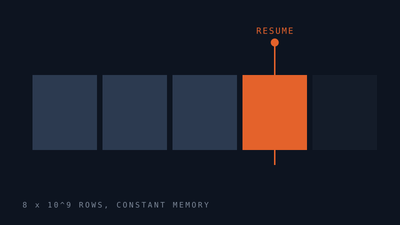 Exporting billion-row tables from ABAP
A streaming cursor, chunked output, and keyset-pagination resume: the three design decisions that get ACDOCA out of an SAP system in one piece.
abap
3 min
Exporting billion-row tables from ABAP
A streaming cursor, chunked output, and keyset-pagination resume: the three design decisions that get ACDOCA out of an SAP system in one piece.
abap
3 min